
From Layoffs to Design: How UX & Design Thinking Can Safeguard Careers
Millions of workers around the world are watching closely as major companies reshape themselves for the future. Amazon’s announcement that it plans to cut roughly 14,000 corporate jobs as part of a strategic pivot toward AI and operational efficiency is a wake-up call.
These cuts are not just numbers—they mark a shift in how digital organisation and innovation are managed. But amid this disruption lies an opportunity: organisations that embrace design thinking, human-centered UX, and agile design practices may be better positioned to adapt, evolve, and preserve talent.
What if jobs weren’t lost because of cost-cutting alone, but transformed through a design mindset that aligns teams to user needs and business purpose? In this post, we’ll explore how UX and design thinking can be strategic levers—not just for product or service design—but for helping businesses remain agile, relevant, and people-centric in a time of change.
1. The Layoff Landscape & What It Means for Design
Amazon’s decision to trim its workforce reflects broader trends: companies are seeking leaner structures, automation, and AI-driven workflows. In such an environment, jobs linked to roles with high variability or low alignment to strategic goals become vulnerable. But roles grounded in user-experience, design thinking, and innovation—that help business re-imagine services, streamline workflows, and centre on user value—can become competitive differentiators.
2. Why UX & Design Thinking Are Strategic Assets
Design thinking emphasises empathy, experimentation, and continuous iteration. UX professionals don’t just craft interfaces—they uncover latent user needs, simplify complexity, and build systems that scale. When a company faces pressure to do more with less, teams focused on user experience and lean design become crucial to reducing waste, improving performance, and enhancing product-market fit. In other words: they help preserve value and relevance—two key factors in keeping teams viable.
3. Aligning Design Roles With Business Purpose
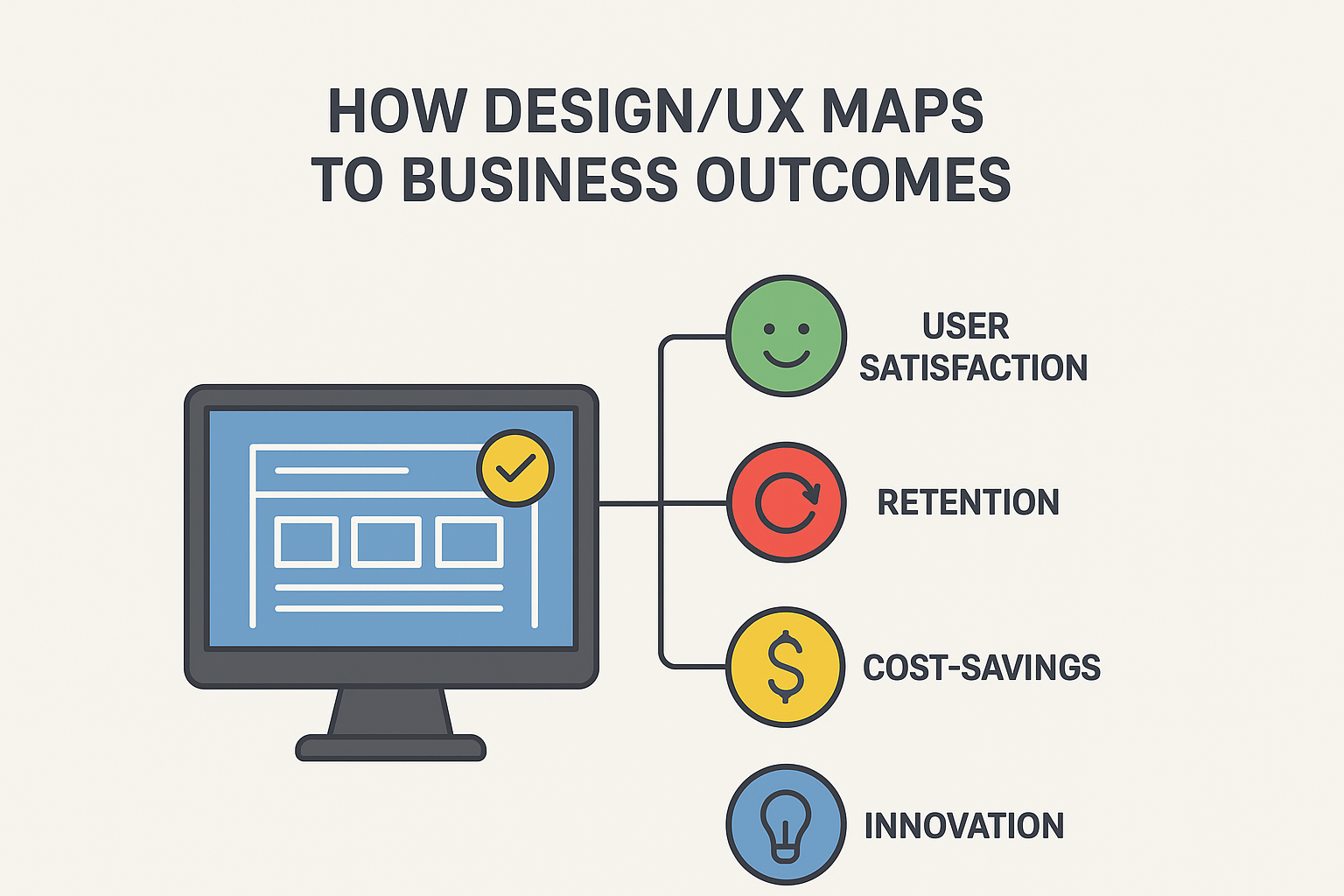
Rather than being siloed in “design”, UX and UI roles must connect to core business metrics: conversion, retention, customer satisfaction, speed to market, and cost-efficiency. If your design team can demonstrate how their work drives measurable business outcomes—streamlining workflows, reducing errors, improving onboarding, reducing support costs—they become indispensable. For instance, a UX audit might reveal a 30% drop in support tickets by redesigning an internal tool. That’s not just “good design”—that’s business survival.
4. Embedding Design Thinking in Organisation Culture
Design thinking isn’t just for external products—it can be applied to internal processes and teams. Organisations can employ UX practices to redesign how internal workflows operate, how teams collaborate, how decisions are made. Leaders who champion design thinking across functions create environments where roles evolve rather than shrink. People become innovators rather than replaceables.
5. Practical Steps for Design Teams to Future-Proof Their Roles
Map your design work to strategic goals and metrics. Show how UX impacts business value.
Identify and lead cross-functional projects (e.g., process redesign, automation UX, customer journey rework) where design can reduce cost and increase value.
Advocate for continuous user research—even internally—to uncover hidden inefficiencies and opportunities.
Build lightweight, high-impact prototypes that validate changes quickly and visibly.
Document and communicate the impact of design work in terms of ROI, time-saved, error-reduction, user satisfaction.
6. Leadership’s Role in Valuing Design & UX
Leaders must recognise design/UX as a strategic investment—not merely a cost centre. When design contributes directly to business resilience, it shifts from being “nice to have” to being core. In times of change, companies that invest in human-centred design often emerge more agile and competitive.
While layoffs at companies like Amazon reflect swift shifts in the business-tech landscape, they also highlight the importance of roles that can adapt, innovate, and align with long-term value creation. For design teams, this is a moment of opportunity—not only to show how design can shape products, but how it can shape organisations. By embracing design thinking, focusing on measurable impact, and embedding UX practices across the business, design professionals can help safeguard their roles—and help their companies stay resilient in an era of change.